
Case Studies
Here are a few times when having a smart, seasoned UX leader made a significant difference.
THE PROBLEM
01 CORTEVA // GLOBAL DESIGN SYSTEM
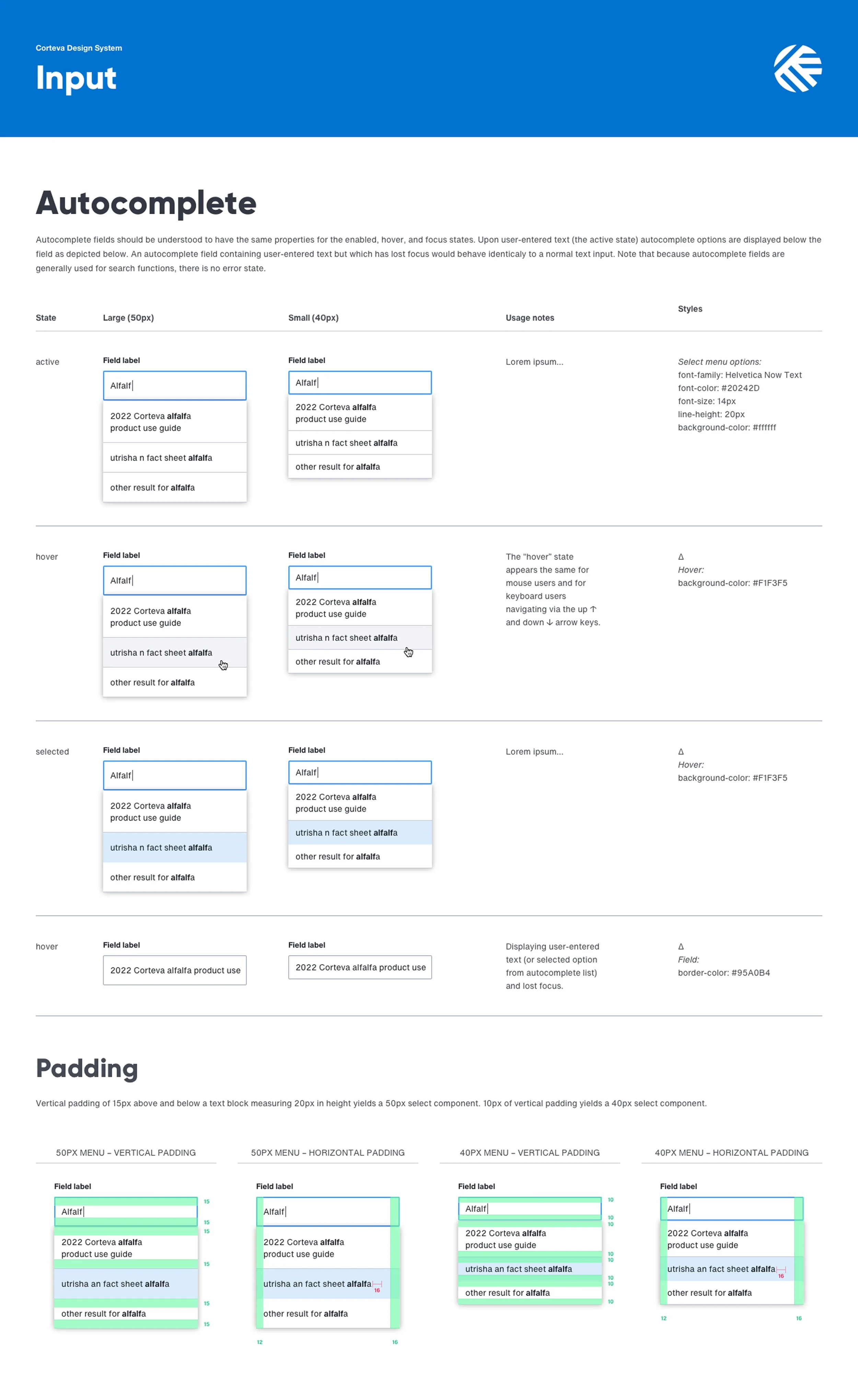
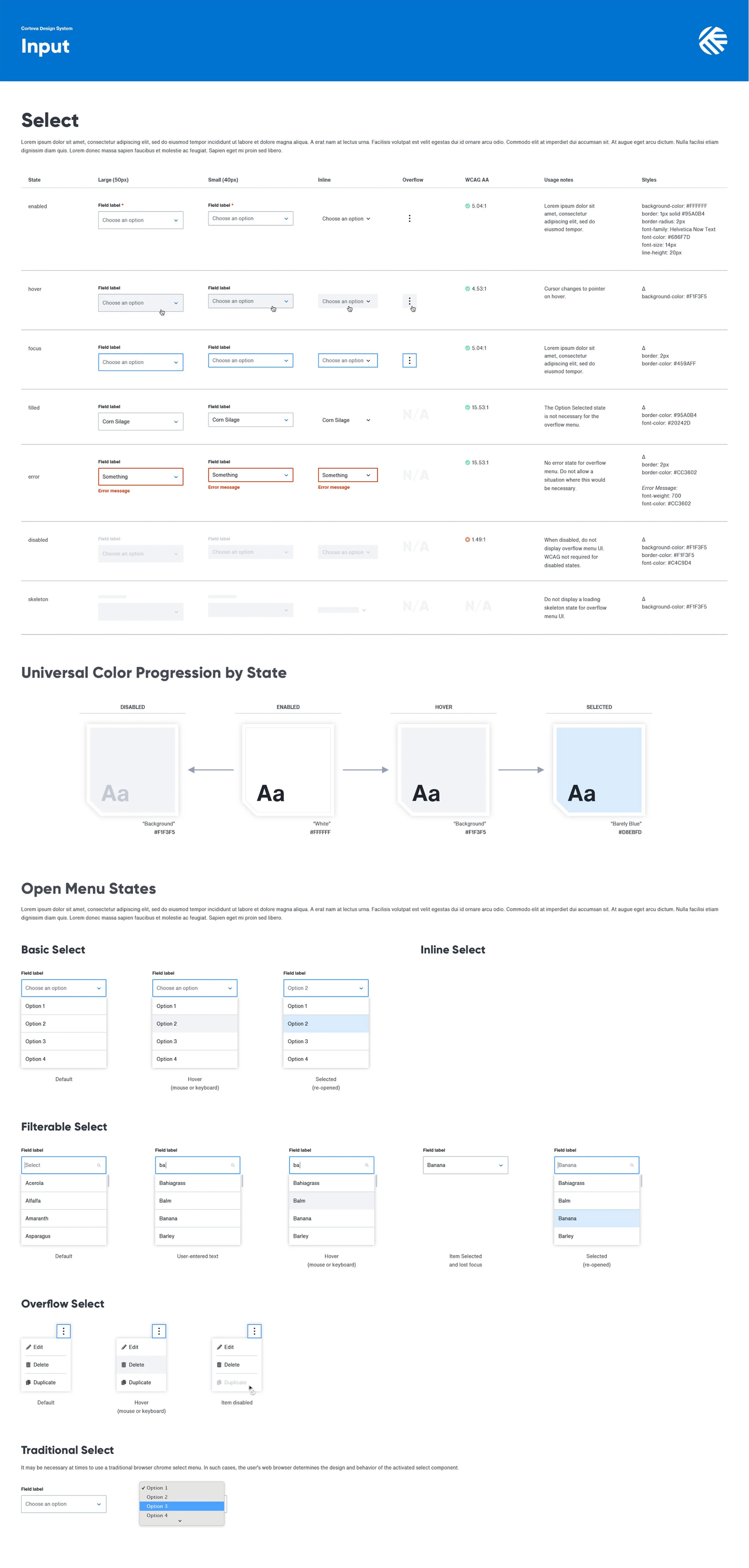
Unifying 50 websites in 35 languages under one WCAG-compliant global design system
Achieve global design consistency while minimizing implementation costs.
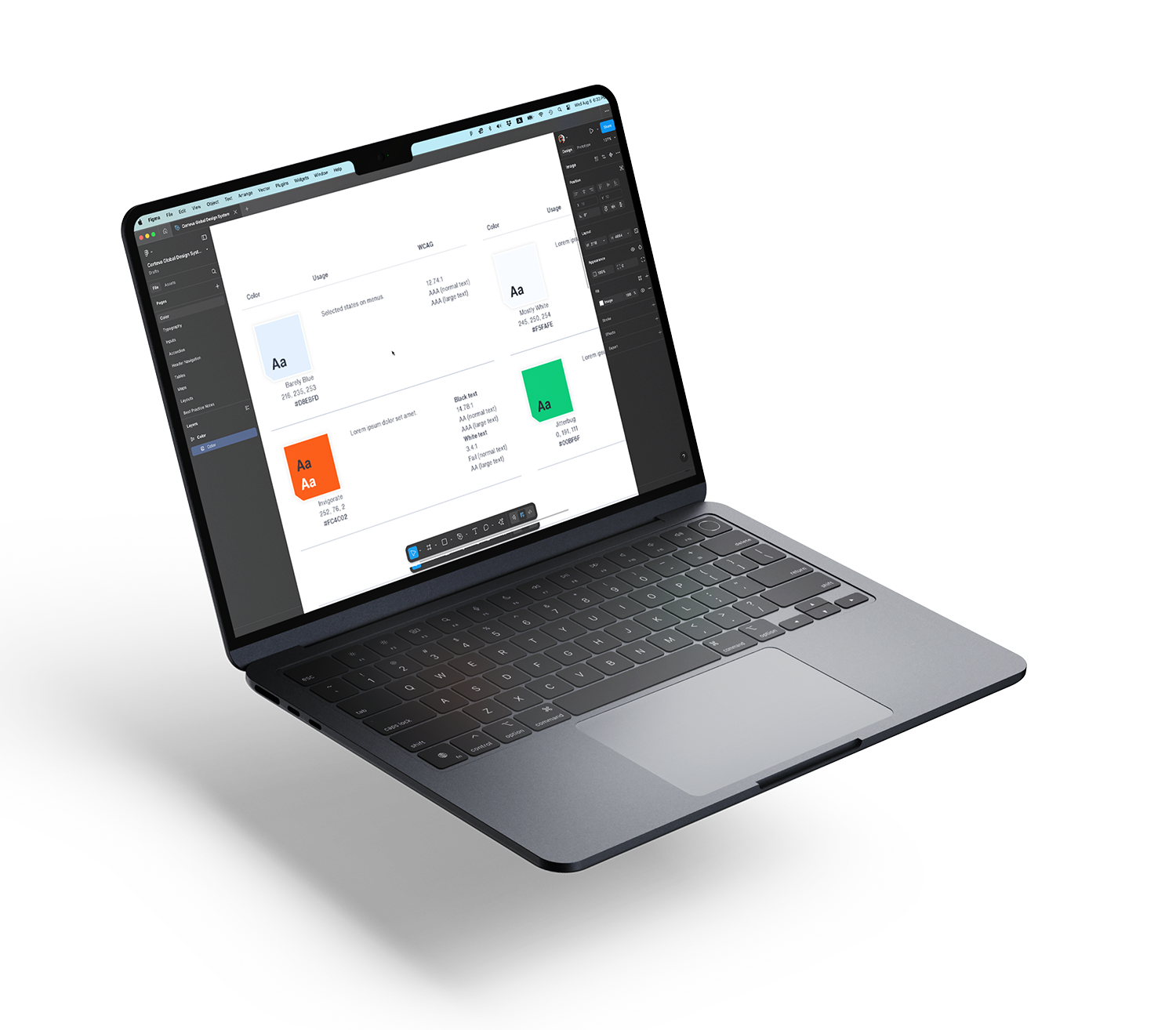
Some 50 corporate websites in 35 different languages were all, to varying degrees, following disparate historic versions of the enterprise’s scattered global design system.
As such, a Corteva website in Latin America might be using many different styles from a website in North America, or Asia Pacific. From one website to the next you would likely have seen different:
Colors,
Typography,
Components,
Design patterns, and
Layouts.
Forcing 100% consistency among all 50 global websites would have cost millions of dollars.
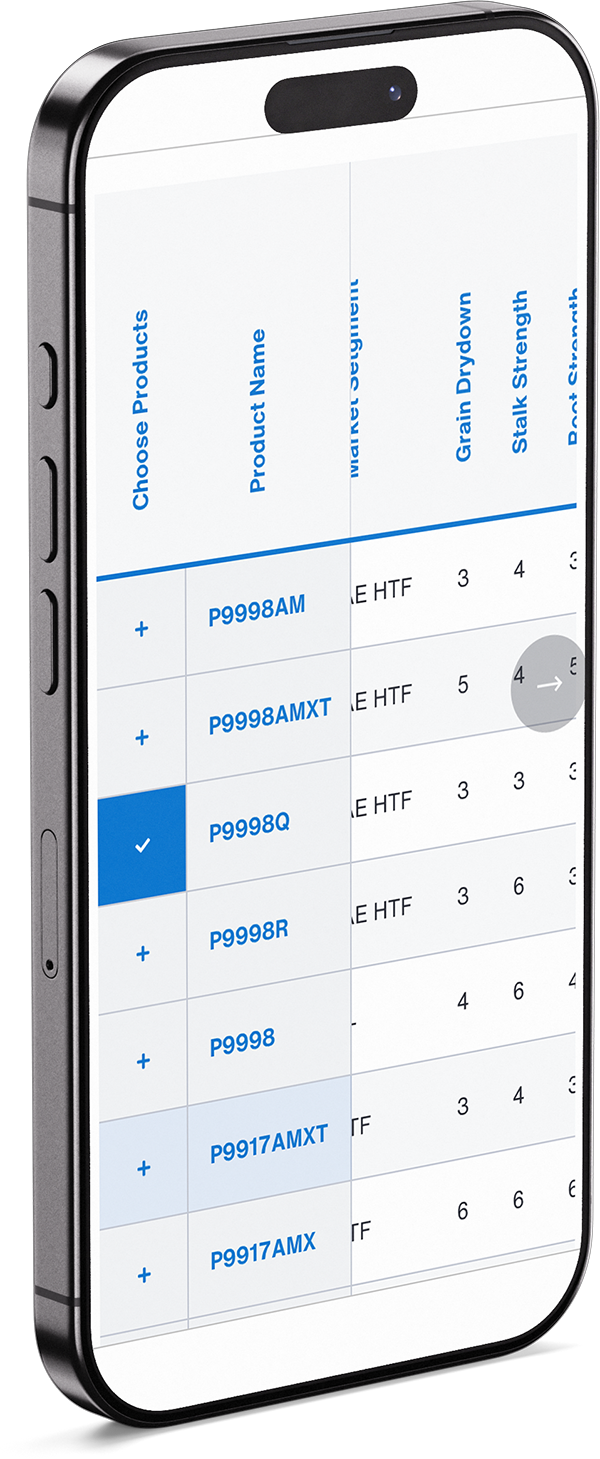
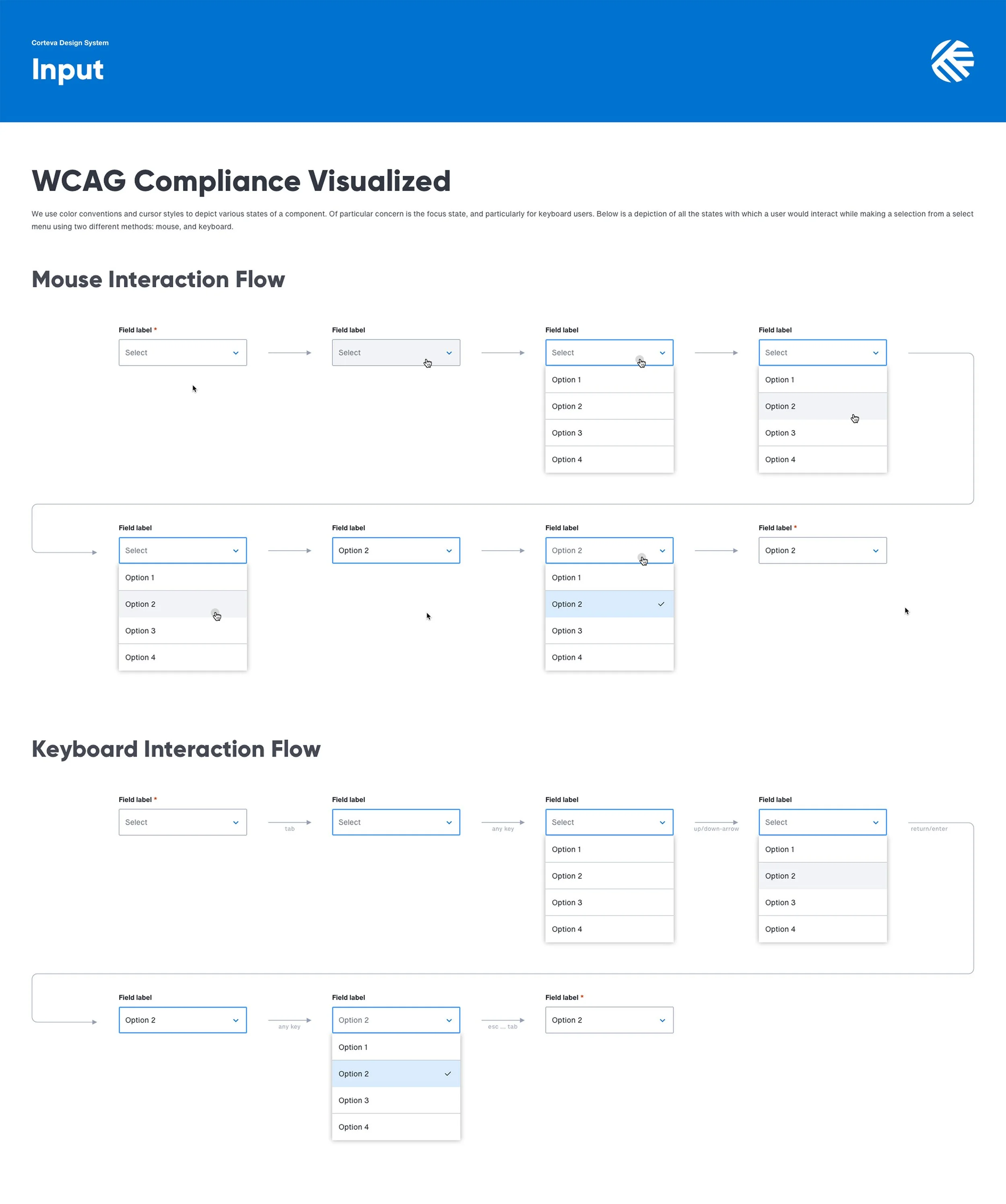
The challenge was to find creative ways of bringing global unity to the brand experience, achieve a minimum of AA WCAG compliance, while also balancing implementation costs.
THE SOLUTION
Research —> Analysis —> Strategy —> Design —> Implementation
Prioritizing the Requirements
Minimum of WCAG AA compliance across all websites.
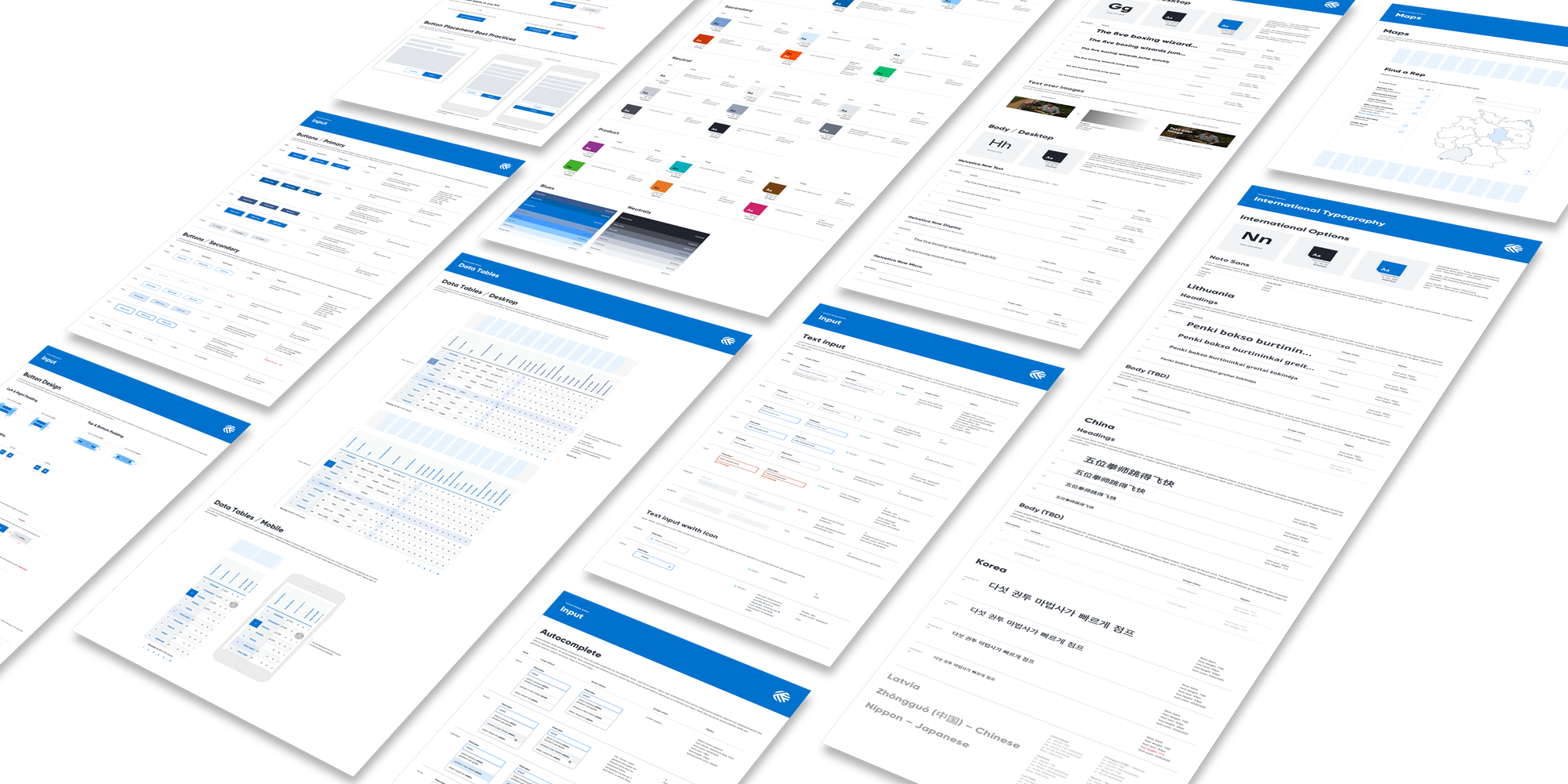
Create a unifying design system that weighs the benefits of aesthetics and usability against global implementation costs.
Solve for desktop and mobile.
A Systematic Approach
Systematically audit every Corteva website across the globe (Americas, Europe, Australasia, Africa, and Asia Pacific)
Use Chrome Developer Tools to inspect the CSS code of each site.
Catalog deviations and variations using a spreadsheet.
Evaluate estimated costs for implementing mandated style updates globally.
Present recommended “Must-haves” and “Nice-to-haves” for bringing all sites into alignment.
Review global design systems such as Carbon (IBM), SLDS (SalesForce), Material Design, Atlassian, and Primer (GitHub).
Comments
Sometimes the costs to implement an input style, font stack, component, or design pattern that was the preferred choice of global HQ were found to be financially prohibitive.
I suggested compromises that would require adjustment to the source standards and enable the right amount of flexibility in the degree of adoption.
This approach saved the client millions of dollars.
CLAIMS PORTAL // HEALTHCARE SaaS PLATFORM
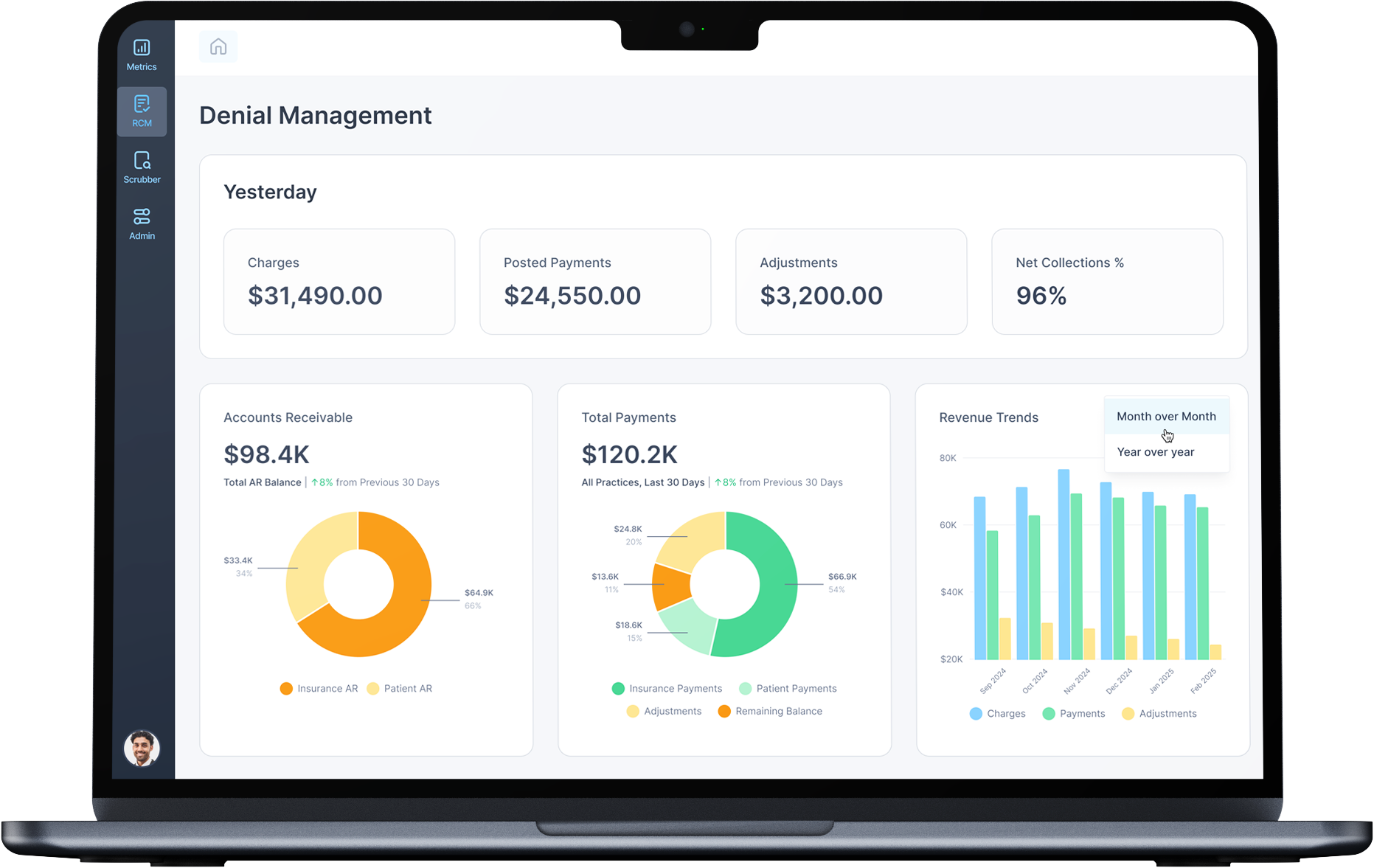
A startup solving the most challenging data problems in healthcare and dental
Bad data leads to bad decision making
Some facts to chew on:
Most software used by dental offices in the U.S. is 20+ years behind in technology. Exporting meaningful data from these systems is like pulling teeth.
Most dental practices have come to accept claim denials by insurance carriers as an unavoidable “cost of doing business.”
Dental Service Organizations (DSOs) that work to streamline operations and increase profitability within a portfolio of perhaps dozens – or even hundreds – of practice locations have no easy way to visualize the big picture in order to make improvements.
We set out to solve these problems.
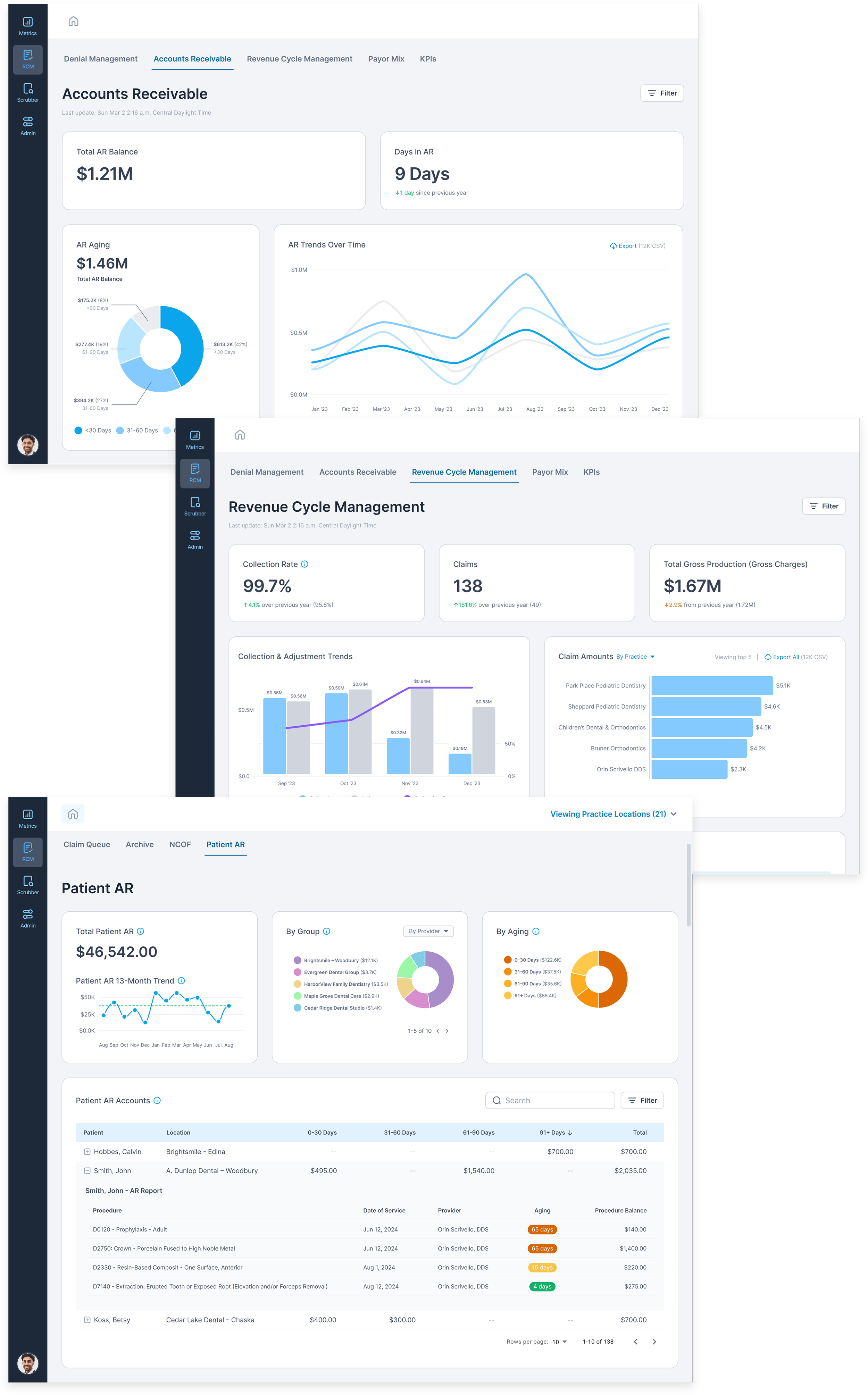
Discovery
Building this product from the ground up began with research. Lots of it. I interviewed product stakeholders, DSO executives, and dental practice personnel who work the day-to-day claims. We discussed:

The complex data challenges which perpetuated an incomplete understanding of how dental practices are performing financially
Employees’ level of understanding of why claims get denied and how denials are (or aren’t) remediated
Common daily workflows, and all of the (sometimes genius) shortcuts and workarounds that the people who are closest to the data were using to get their work done
Theories on how a new, user-centered product with sophisticated data feature engineering and machine learning could disrupt the industry
A mission focused on advocating for patients and doctors while holding insurance companies accountable to their policies
Project Artifacts
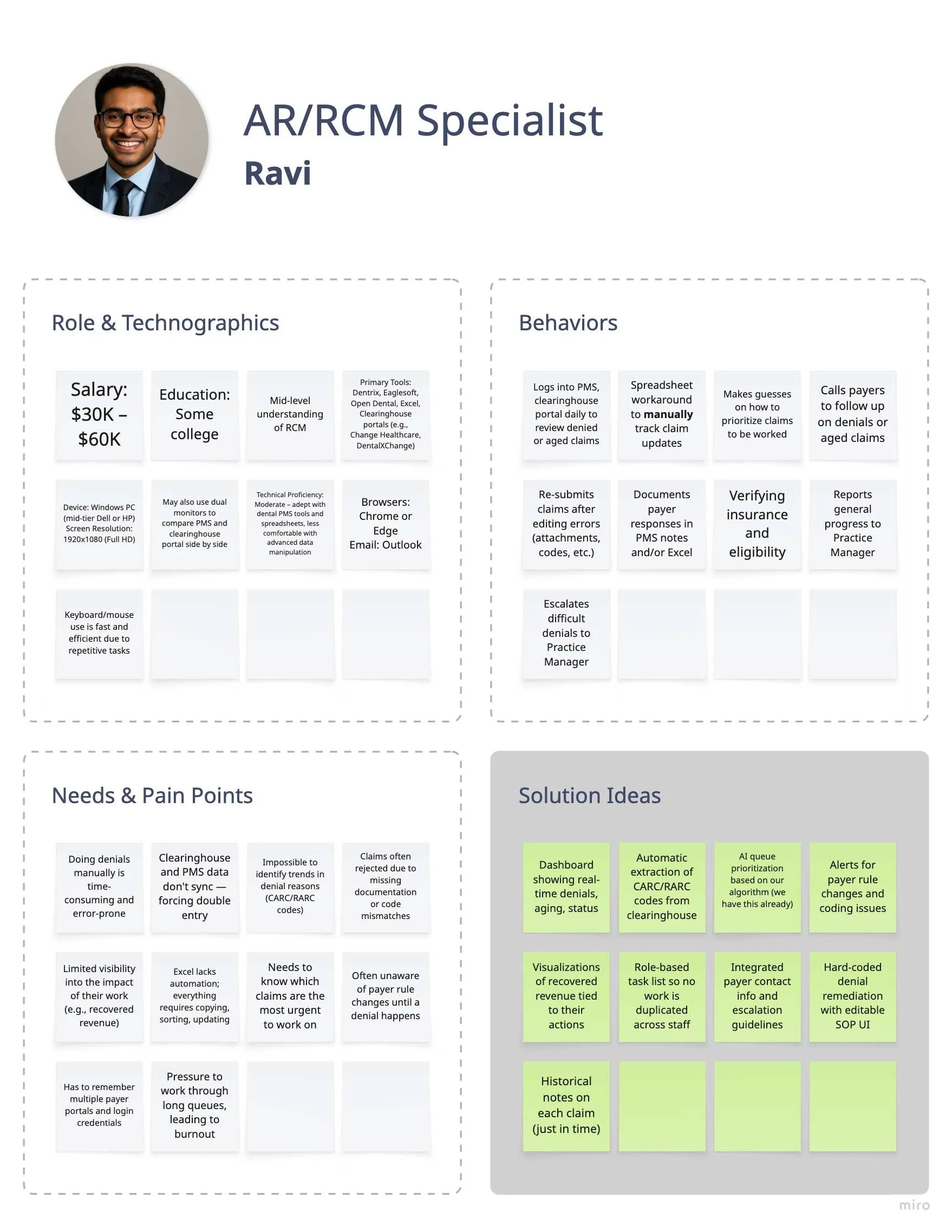
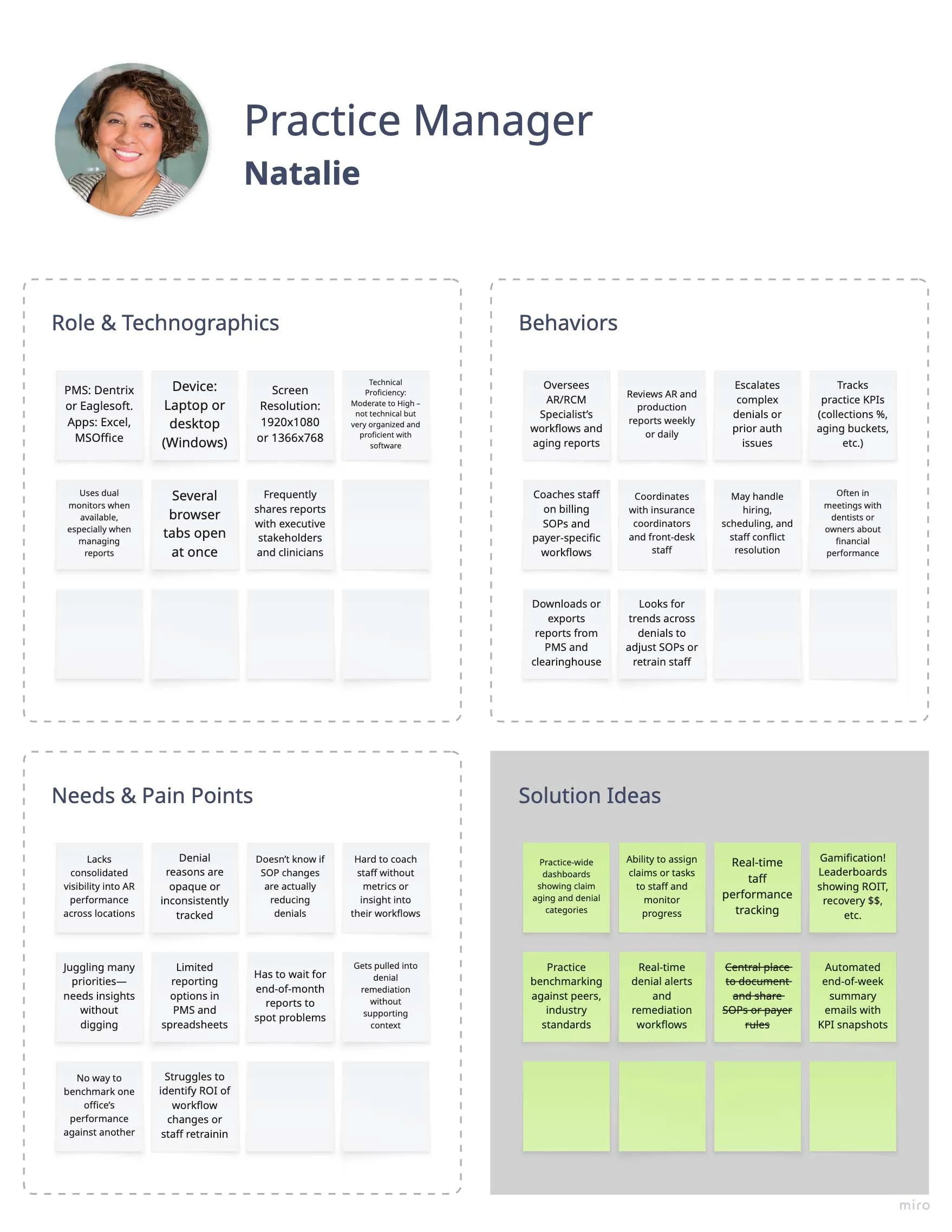
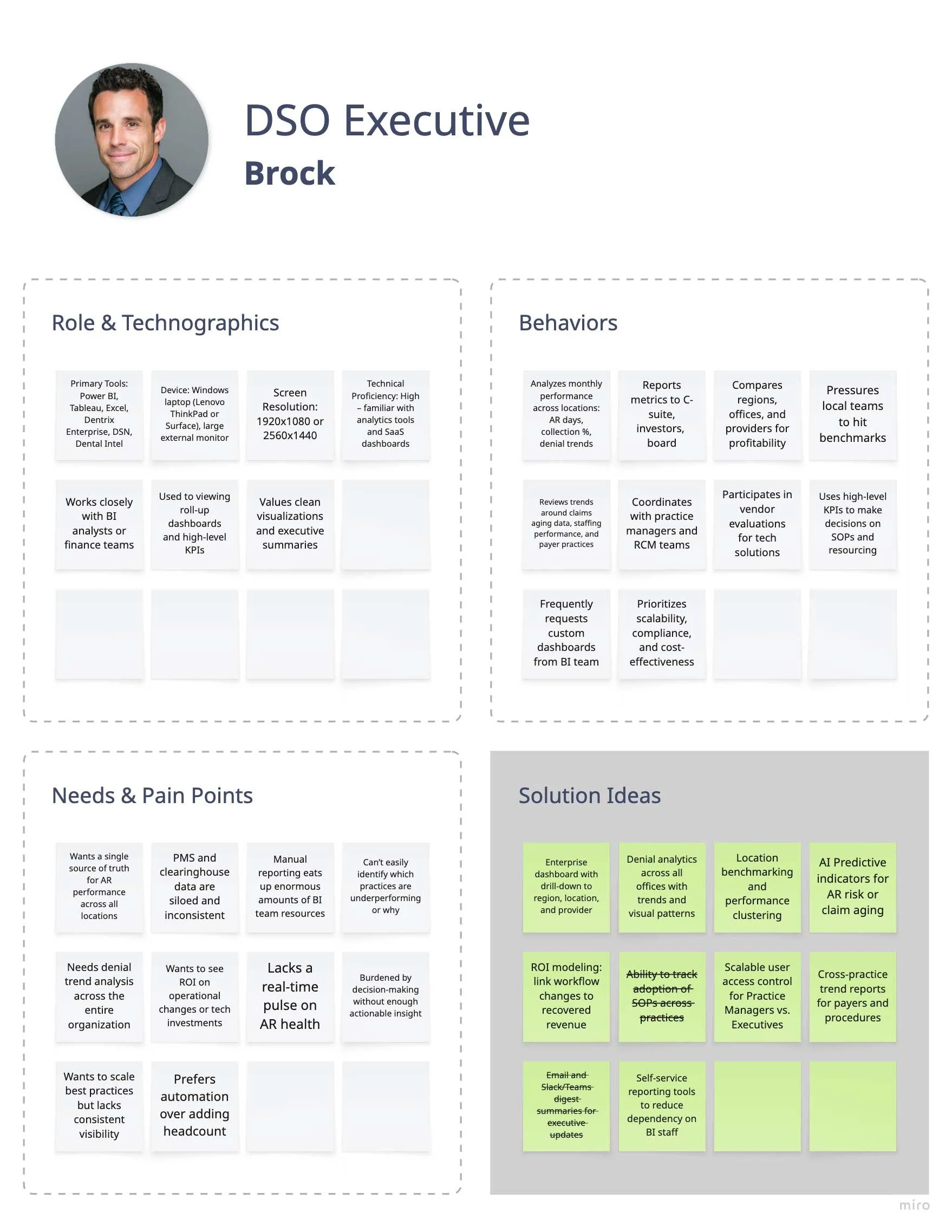
Proto-Personas (Archetypes)
I don’t think of personas as a once-and-done research deliverable. Rather I see them as lightweight living documents to be regarded as assumptions until validated by real users. I leave out the superfluous and focus primarily on their roles, behaviors, and the pain points they face as they try to achieve their goals.
The direct line from pain point to product opportunity makes these useful in real design decisions, without having to pretend we know more about the user than we actually do.
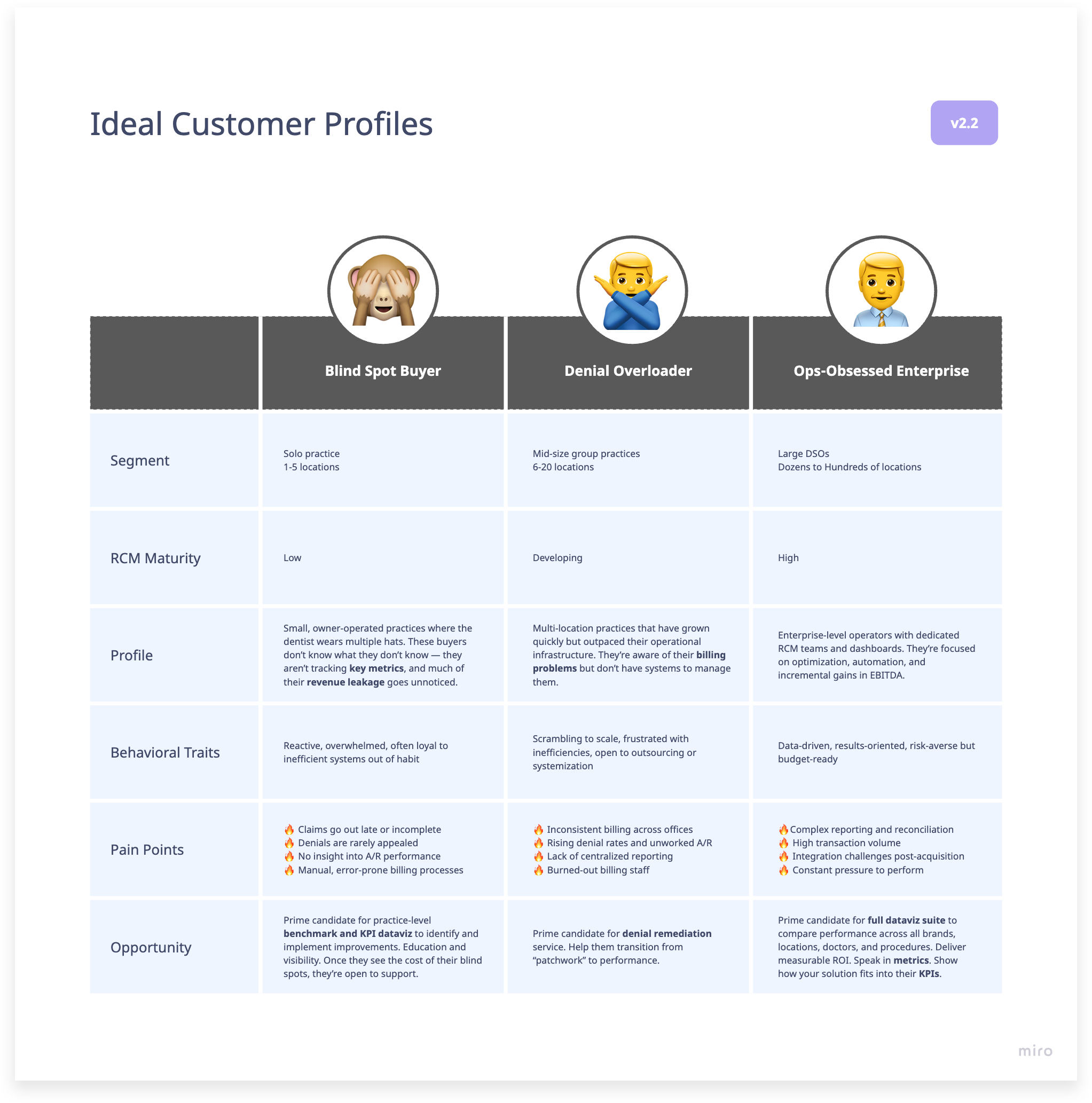
Ideal Customer Profiles (ICPs)
I developed these profiles by synthesizing insights from sales demos with prospective customers and AI-assisted market analysis. Each segment maps to a distinct go-to-market path — not one product sold three ways, but three different wedges into the market based on RCM maturity and pain point severity.
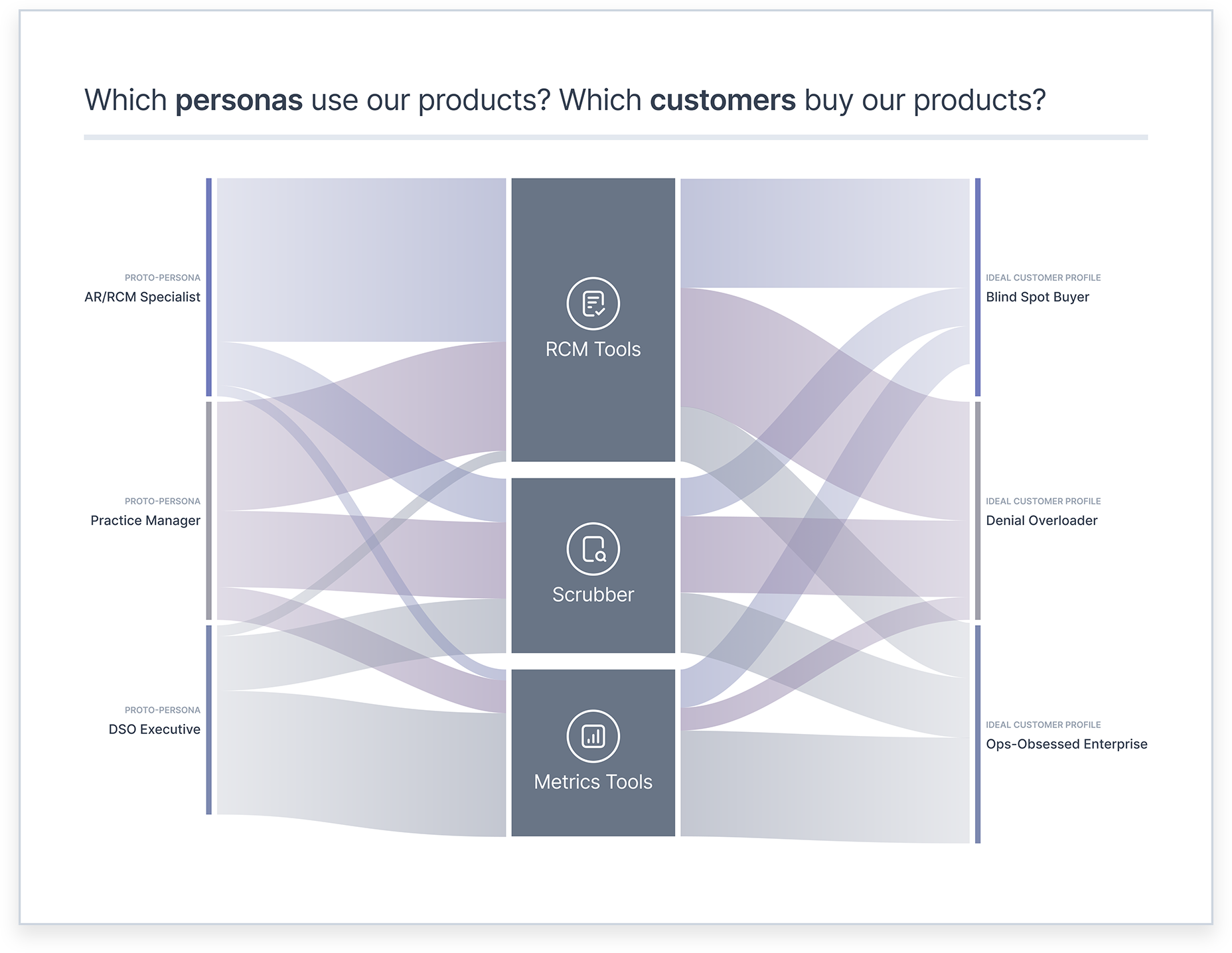
Users vs. Buyers
In B2B SaaS, the person using the product is rarely the person buying it. This diagram connects user personas to product areas to buyer profiles. This artifact shows how every role touches multiple parts of the platform, but with different weight and intent.
Having visibility into this at an early stage keeps the team from conflating user needs with buyer motivations, which prevents us from building features that nobody asked for.
Ready to chat?
We can schedule 30 minutes to talk about your project and see if there’s a fit.